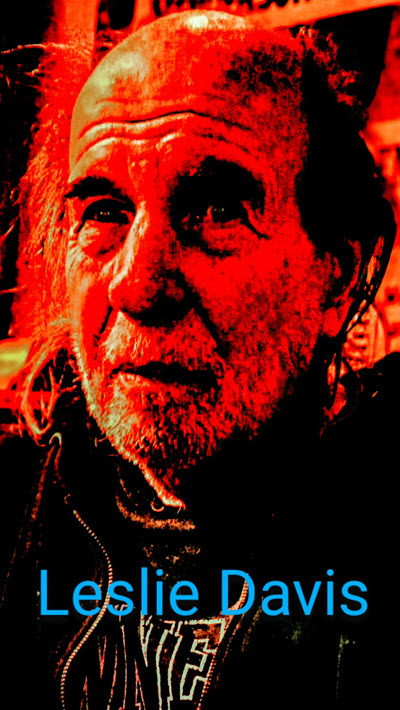
Leslie Davis for Governor Minnesota - Political Candidate, Activist, Environmentalist

Eagle Eye


Leslie Davis
Activist
Environmentalist - Economist

Eagle Eye


Home       Issues       Leslie Bio     Donate      Contact       TV Schedule

News     Articles   Videos     Photos     Volunteer

Home

"The Earth Protector Money Plan"
Minnesota Senate File 65 and House File 610

will bring debt-free money into circulation.
With it we can build state of the art, roads and bridges
throughout every city, township, county in Minnesota.
Money previously used for this purpose could then
be used to balance the budget without cutting.
In addition, the fuel, axle and registration
taxes could be eliminated.

1. "The Earth Protector Money Plan” will “modify existing law” as encompassed in: "POWERS OF MINNESOTA STATE CHARTERED BANKS".

2. The "modification" in "The Earth Protector Money Plan” requires state-chartered banks to create debt-free money specifically for the construction and maintenance of all "approved" public roads and bridges (state, county, city, and township) using the current bidding and building process.

3. Banks do not lend the depositor's money.

4. When state-chartered banks make loans today, they simply create new money as electronic bookkeeping entries that are secured by a borrower’s collateral. The money is just numbers in their computers. Then when a check is used numbers (money) move into circulation and the money (numbers) moves freely through the economy.

5. "The Earth Protector Money Plan” requires state-chartered banks to create brand new money for roads and bridges. THESE WILL NOT BE LOANS but final debt-free payment for approved production. THIS MONEY DOES NOT HAVE TO BE PAID BACK. It will cost the bank virtually nothing to issue this new money and they will get a fee for their service.

6. Since it is payment for production there is no price inflation. What causes price inflation is taxes and interest because they have to be added to the cost of doing business. "The Earth Protector Money Plan" money does not add to the cost of doing business. On the contrary, it allows prices to go down.

7. Fuel, axle and registration taxes would be eliminated saving individuals and businesses billions of dollars.

8. “The Earth Protector Money Plan" will create thousands of high-paying jobs, provide for a well-maintained, state-of-the-art, road and bridge system and help balance the budget.

9. When this brand new wealth-money goes into the economy it will turn over about 6-8 times and get taxed at many of its turns thus helping balance the budget.

10. “The Earth Protector Money Plan" is not much different than the way state-chartered banks already operate. The banks don’t like this because they don't get ownership of anything. However, they will provide this service because it will be the law and for their effort the banks will get a service fee, good-will, great roads, and a growing economy.

Leslie Davis – 612/529-5253

"The Earth Protector Money Plan"
Minnesota Senate File 65 and House File 610

• Balanced budget
• Protected environment
• Create thousands of jobs & incomes
• Cut fuel, axle, and registration taxes in half
• Build and maintain safe, state-of-the-art roads and bridges

"The actual creation of money always involves the extension of credit by private commercial banks."
Russell L. Munk, Assistant General Counsel International Affairs, US Treasury

"A private commercial bank...simply makes book entries for its loan customers saying, 'You have a deposit with us.'"
Russell L. Munk, Assistant General Counsel International Affairs, US Treasury

"Money is created when loans are issued and debts incurred. Money is extinguished when loans are repaid. A loan from a bank creates a deposit which the borrower may draw upon for the payment of obligations. Some existing money in circulation must be acquired by the borrower to repay the capital of the loan. When that is returned to the bank it is withdrawn from circulation."
John B. Henderson, Sr. Specialist Price Economics, Congressional Research Service.

"Money that one borrower uses to pay interest on a loan has been created somewhere else in the economy by another loan."
John M. Yetter, attorney, US Treasury


Home       Issues       Leslie Bio      Donate      Contact       TV Schedule

News     Articles   Videos     Photos     Volunteer